News
How LED Grow Lights Cut Greenhouse Energy Costs — and Support Bigger Harvests
LED fixtures turn more of every watt into light the crop can use — and growers in the Netherlands and Belgium are seeing lower energy bills and better prices. Here is how the maths works.
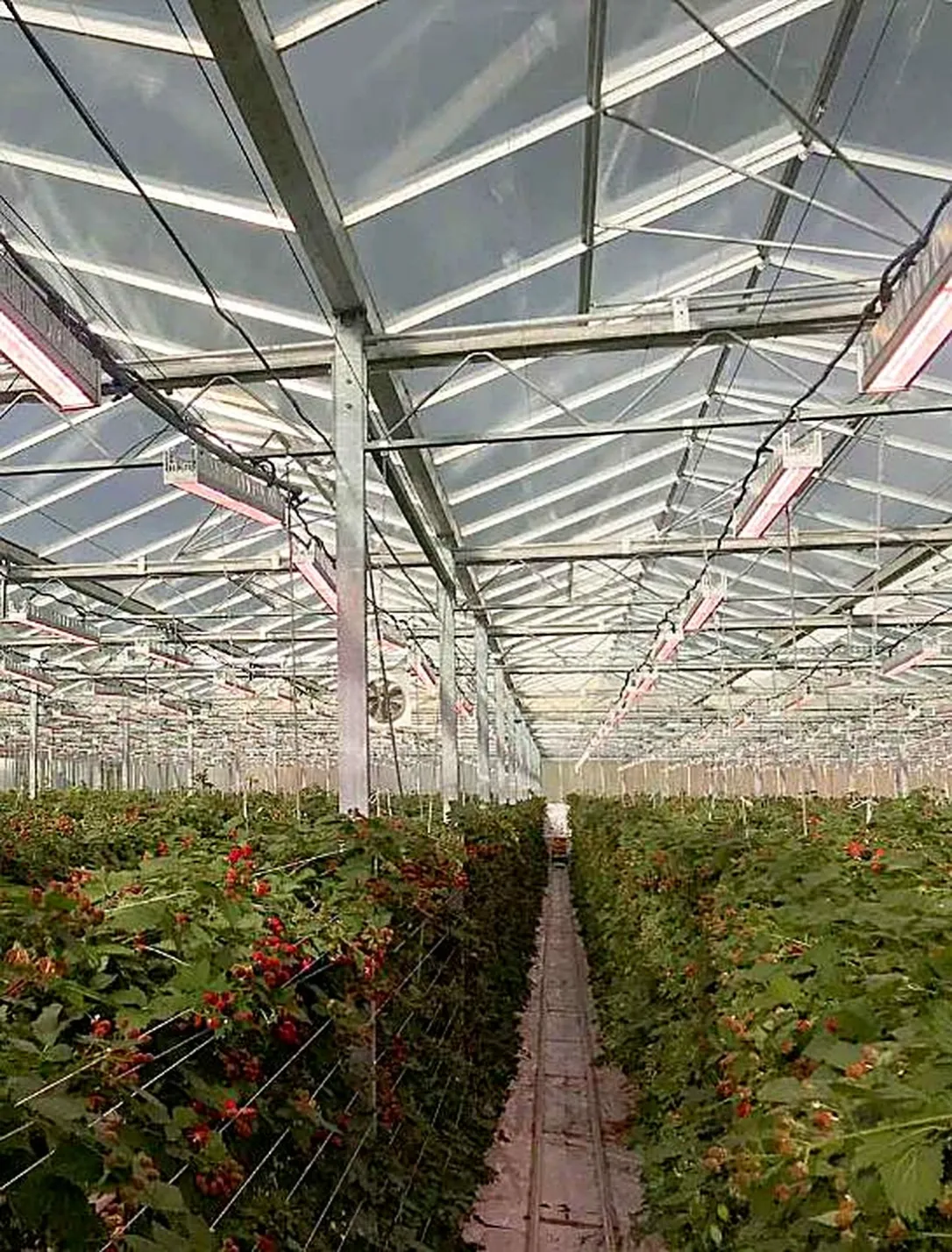
Ask any greenhouse grower where the money goes and lighting is near the top of the list. Supplemental lights run for long hours through the dark months, and traditional greenhouse lamps — high-pressure sodium above all — turn a large share of that electricity into heat rather than light the crop can use. Full-spectrum LED grow lights were developed to fix exactly that: more of every watt becomes usable light, tuned to what the plant actually absorbs.
Top lights, inter-lights, and light where the plant needs it
Modern LED setups work on two levels. Top lights hang above the canopy and replace or supplement daylight for the whole crop. Inter-lights sit down inside the rows, delivering light to the lower leaves and fruit that the canopy shades — light that a top light alone can never reach. Choosing the spectrum matters as much as the wattage: Caili has developed 80+ custom spectra in its own 1,600 m² photobiology laboratory, so the light recipe can be matched to the crop and growth stage instead of settling for one-size-fits-all brightness.
What growers have seen in practice
Two projects from our own case studies show what that means in a real greenhouse. In a Netherlands cucumber greenhouse, Interlight 40W inter-lighting shortened the time from bloom to fruit from 21 days to 13 days, and annual output rose from 96 to 128 kg/m² — a yield increase of about 30%, with bigger, more uniform plants and greener colour than the unlit comparison. In Belgium, a tomato greenhouse combining a 75W top light with a 40W inter-light produced high-quality tomatoes whose sales price increased by 60%. The full project notes are in the case studies on this page.
Where the energy savings come from
As general guidance, LED fixtures typically deliver the same or more usable light at substantially lower wattage than the traditional fittings they replace, so the electricity bill per hour of light falls from day one. Dimming and scheduling add a second saving: light is only paid for when the crop needs it, at the intensity it needs — and because LEDs turn more power into light than heat, less cooling is needed in the greenhouse itself.
Planning a project?
The right fixture depends on the crop, the growing area and the ceiling height, and spectrum tuning is part of the decision too — Caili builds 80+ custom spectra in its own 1,600 m² photobiology laboratory, and tests finished fixtures in a UL / TÜV / CNAS / DEKRA testing centre. If you are planning a greenhouse or updating a fleet of HPS lamps, talk to us about the crop and the space first, and we will recommend a top-light or inter-light, or a combination, and quote it for you — or look at the grow light range, or start from the cucumber and tomato projects above and ask for the same approach in your greenhouse.
Planning a project or restocking? Tell Anney Yang the models and quantities you need and she will reply with unit pricing, MOQ, freight and lead time — usually within one business day.